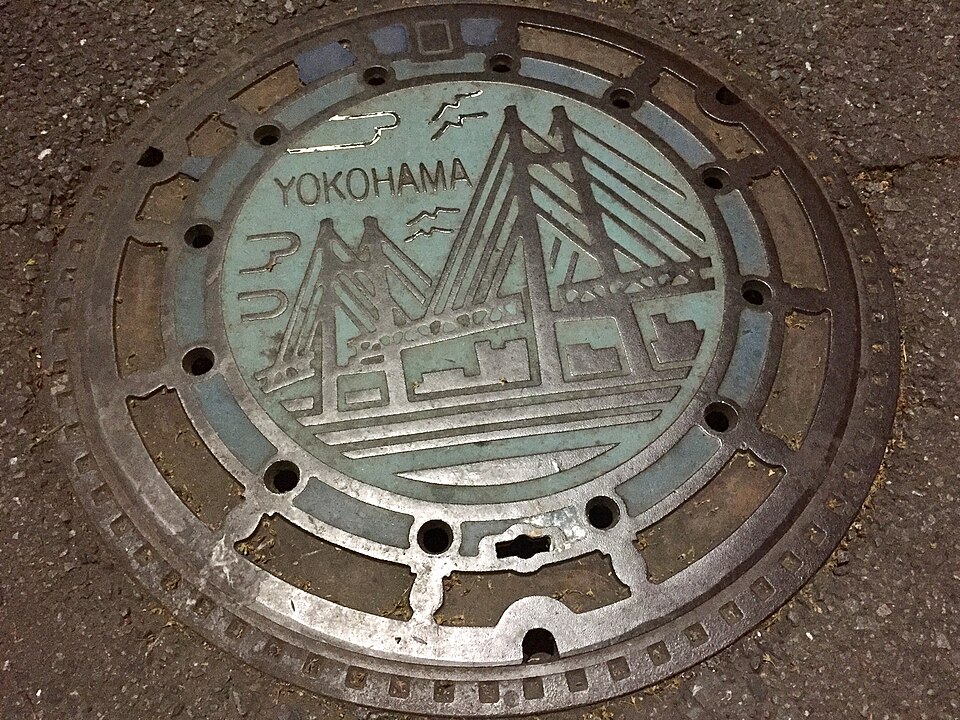
I was looking through photos of Japanese streets when a little patch of blue caught my eye. Someone had fitted a whole harbor scene, bridge and all, onto a manhole cover in Yokohama. Why put that much care into something most people walk right over? The answer starts with a school of fish in Okinawa and leads to a free souvenir you can pick up at Yokohama Station.

Why Japan Decorates Its Manhole Covers
One of the earliest examples began as a way to show people what happens to the water they send down the drain. In 1977, Naha, Okinawa, introduced a manhole cover with a school of fish swimming in water cleaned by the city’s sewer system. You could read it as a seaside motif at first glance. Look again and the water is the point. Embassy of Japan in Singapore.
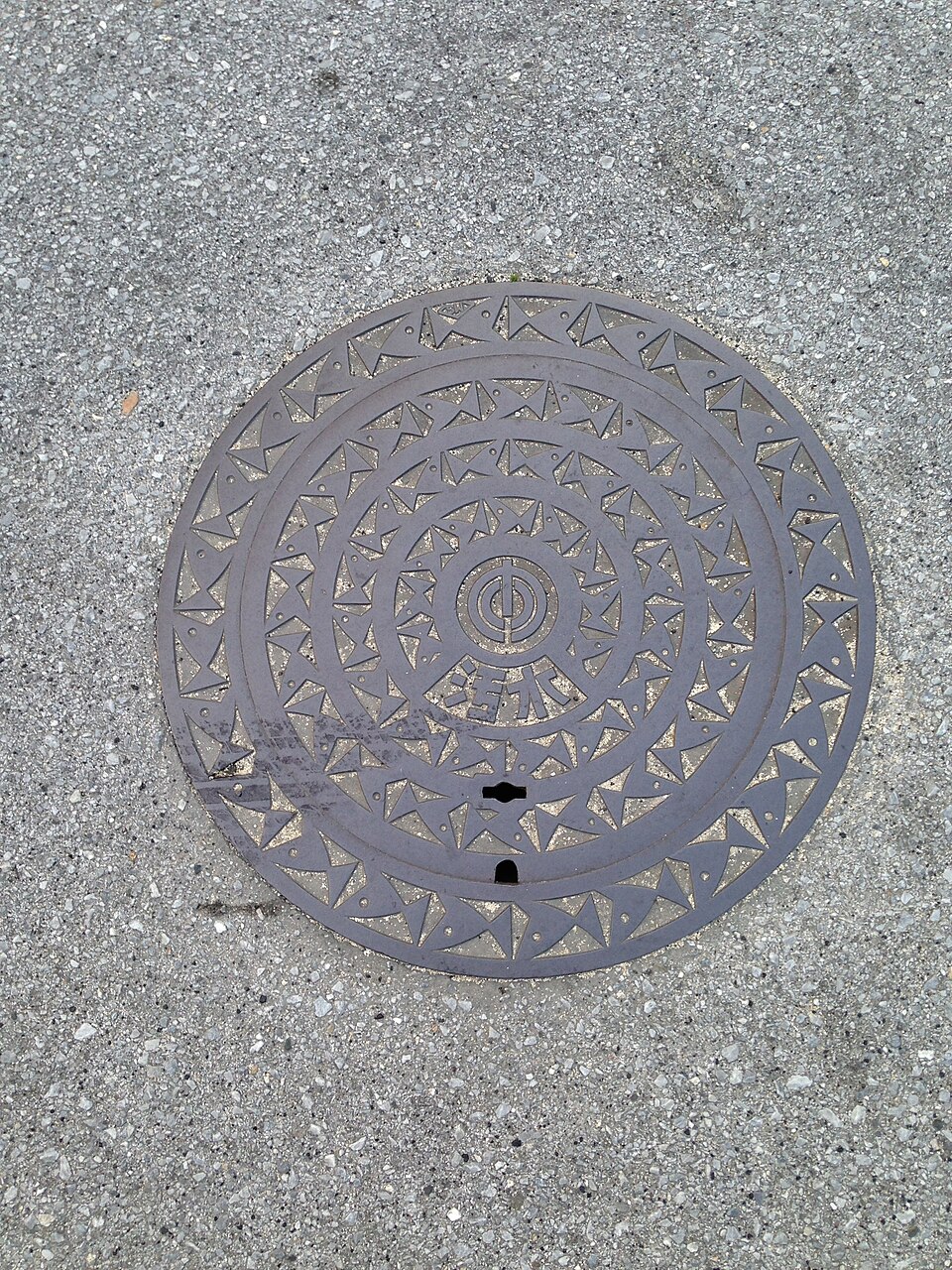

Once water disappears down the sink, most of the work happens out of sight. A manhole cover sits right where people can see it, above the pipes crews need to reach. Naha used that patch of pavement to get people thinking about the sewer system. Other places put their own flowers, landmarks, and characters on their covers, giving passersby another way to recognize a town.
The fish in Naha follow one another around the circle, so you can make sense of the design from any side. Yokohama’s bridge has a clear upright view. The same round shape makes room for two very different ways of looking.
Yokohama’s Bridge and Himeji’s White Heron
Yokohama puts its bridge underfoot
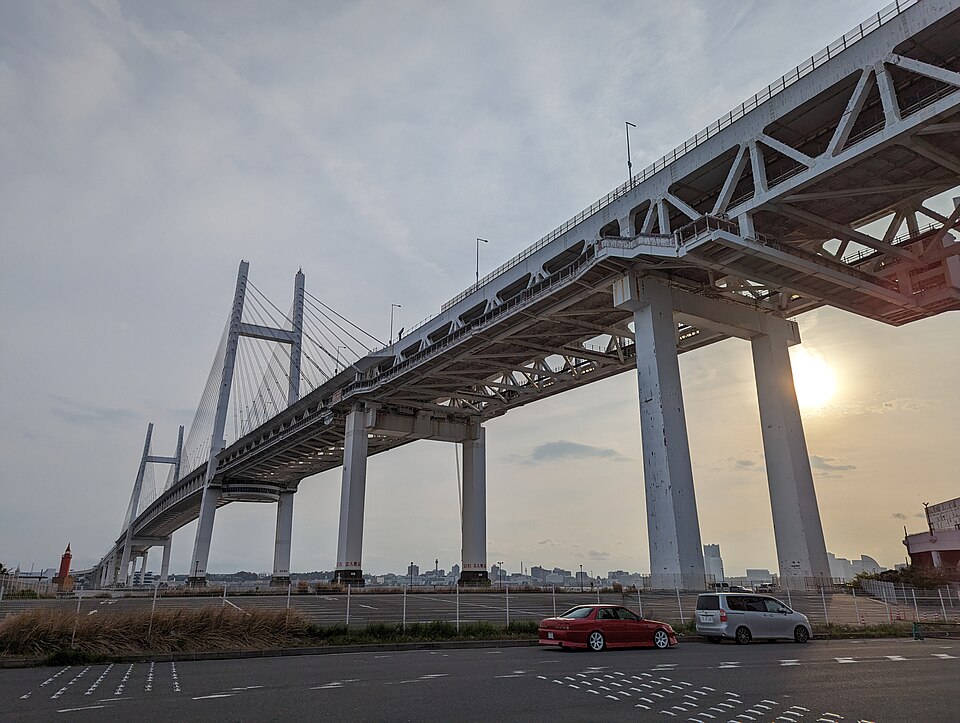
Look again at the diagonal lines on the cover in the first photo. Compare them with the real Yokohama Bay Bridge and they resolve into the cables that run from its towers to the deck. Two details are enough to recognize the bridge even before you read its name.

Himeji’s white bird comes with a clue
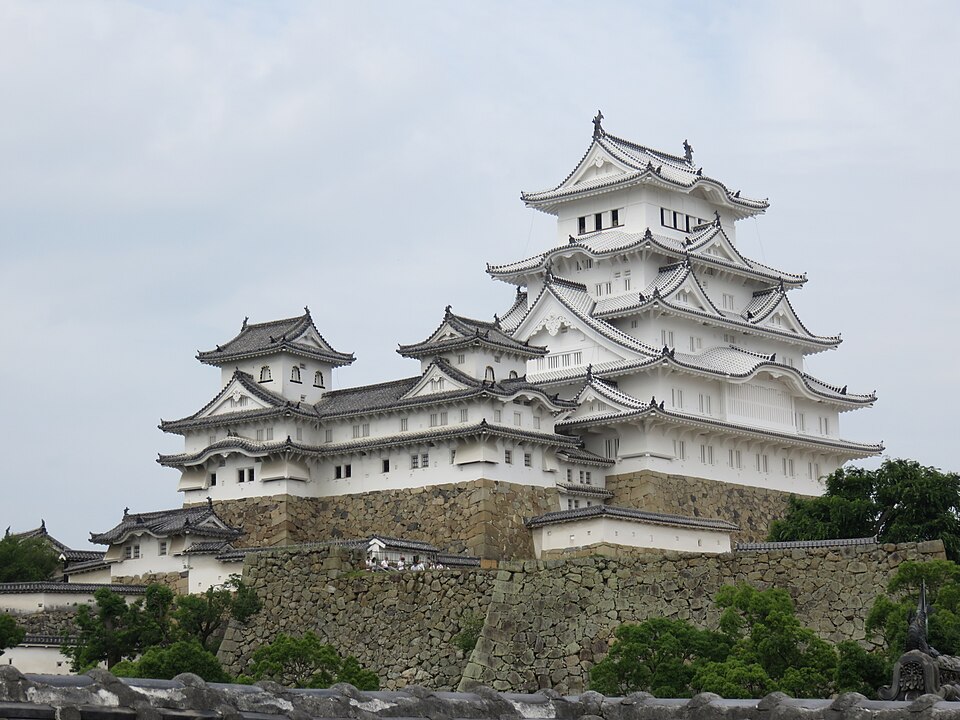
Himeji Castle is known as the White Heron Castle. Its white walls and layered roofs are said to resemble a heron spreading its wings. The same bird appears on a square cover in the city, its wings stretched across the metal.

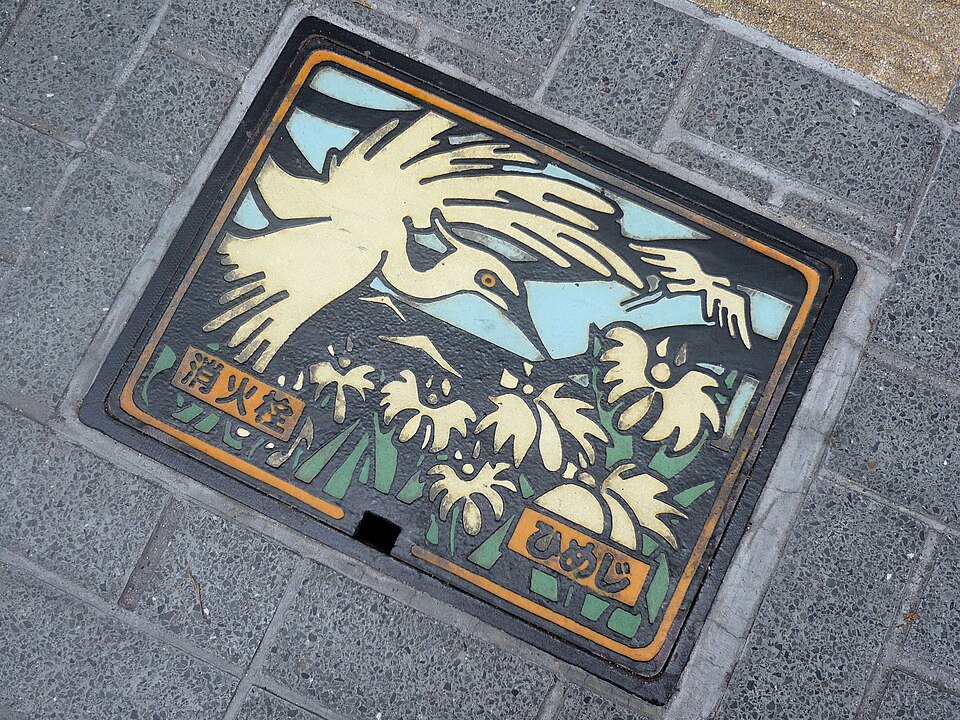

Those characters, 消火栓 (shōkasen), mean ‘fire hydrant.’ The picture tells you something about Himeji. The lettering tells you what’s beneath the lid.
Where to Get a Free Manhole Card in Yokohama
Japan’s manhole cards are collectible cards featuring local sewer-cover designs. You can pick one up for free in person at its designated distribution point. In Yokohama, the painted Bay Bridge cover and the counter that hands out its card are in different places.
| What to look for | Where to go |
|---|---|
| The Bay Bridge manhole cover | Along the road on the west side of Motomachi Park (元町公園). |
| The free Bay Bridge manhole card | Yokohama Station Tourist Information Center, second-floor atrium of JR Yokohama Tower, near the station’s West Exit. 10 a.m. to 5 p.m., including weekends. |
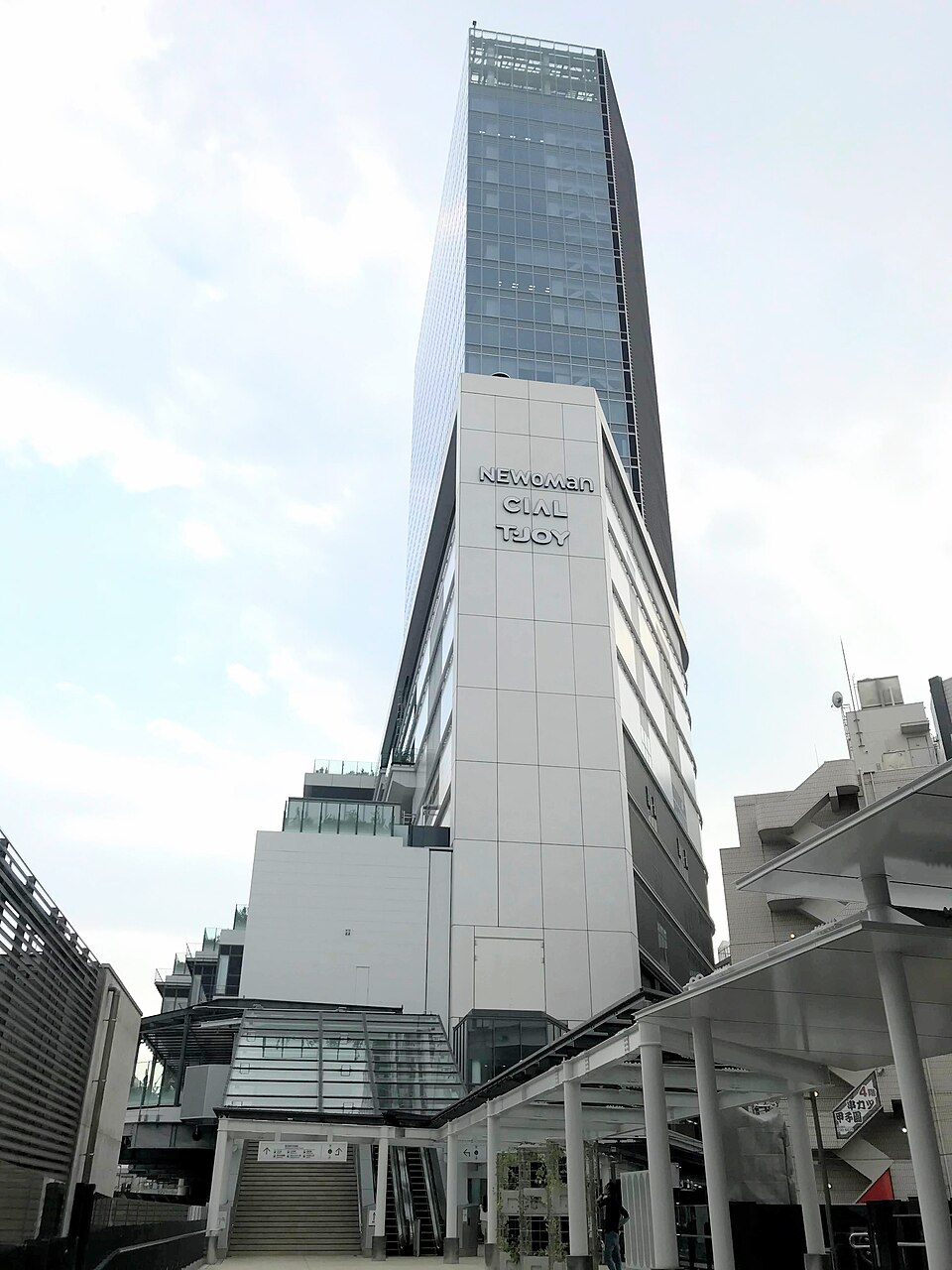

For directions in a map app, search 元町公園 for the park and 横浜駅観光案内所 for the information center. Yokohama distributes more than one design. At the counter, you can ask for the Bay Bridge pattern by showing the words ベイブリッジ柄. The city updated the card on April 1, 2026, after replacing the aging cover with one of a similar design. See the current card and distribution details on Yokohama’s official site.
Frequently Asked Questions
How many cards can I get?
Yokohama gives out one card per person. The city does not take advance reservations or distribute cards by mail.
Can I pick up the card at Motomachi Park?
The cover is on the road west of the park. You can get the card at the tourist information center by Yokohama Station, even if you skip the park.
Can I get manhole cards in other cities?
Yes. Pickup locations and hours depend on the city and the design. Check those details and any stock notices before making a special trip. Japan’s official manhole card finder.
The next time you spot a design in the pavement in Japan, take a second look. See what the picture tells you about the neighborhood and whether the lettering gives away what lies underneath. Then check if there’s a card to take home.
If you could put one image on a cover in your own neighborhood, what would you choose?